Friday, June 23, 2006

Anca verjaar vandag! (23 Junie)


June 23 is the 174th day of the year (175th in leap years) in the Gregorian Calendar, with 191 days remaining.

Events
1305 - Flemish-French peace treaty signed at Athis-sur-Orge.
1314 - Start of the Battle of Bannockburn south of Stirling, Edward II of England & Robert I of Scotland met in battle. Scotland won and Edward fled the field and Scotland.
1532 - Henry VIII & François I sign secret treaty against Emperor Charles V.
1611 - The mutinous crew of Henry Hudson's fourth voyage sets Henry, his son and seven loyal crew members adrift in an open boat in the Atlantic Ocean; they are never heard from again.
1661 - Marriage contract between Charles II of England & Catharina of Portugal.
1683 - William Penn signs friendship treaty with Lenni Lenape Indians in Pennsylvania.
1713 - French residents of Acadia given one year to declare allegiance to Britain or leave Nova Scotia Canada. [1]
1757 - Battle of Plassey - 3000 British troops under Robert Clive defeat a 50,000 strong Indian army under Siraj Ud Daulah at Plassey.
1758 - Seven Years' War: Battle of Krefeld - British forces defeat French troops at Krefeld in Germany.
1760 - Seven Years' War: Battle of Landshut - Austria beats Prussia.
1794 - Empress Catherine II grants Jews permission to settle in Kiev.
1810 - John Jacob Astor forms the Pacific Fur Company.
1812 - Napoleon begins the famous offensive on Russia, which fails horribly.
1812 - War of 1812: Great Britain had revoked the restrictions on American commerce, thus eliminating one of the chief reasons for going to war.
1858 - Six-year-old Edgardo Mortara is seized by Papal authorities.
1860 - The US Congress establishes the Government Printing Office.
1865 - American Civil War: At Fort Towson in Oklahoma Territory Confederate General Stand Watie surrenders the last significant rebel army.
1887 - The Rocky Mountains Park Act becomes law in Canada, creating that nation's first national park, Banff National Park. [2]
1888 - Frederick Douglass is the first African-American nominated for US president.
1894 - International Olympic Committee is founded at the Sorbonne, Paris, at the initiative of Baron Pierre de Coubertin.
1919 - Defeat of German forces at Cesis in northern Latvia during Estonian Liberation War, now celebrated annually as Estonian Victory Day.
1931 - Wiley Post and Harold Gatty take off from Roosevelt Field, Long Island in an attempt to accomplish the first round-the-world flight in a single-engine plane. [3]
1938 - The Civil Aeronautics Act is signed into law, forming the Civil Aeronautics Authority in the United States.
1938 - Marineland opens near St. Augustine, Florida.
1940 - World War II: German leader Adolf Hitler surveys newly defeated Paris in now occupied France.
1941 - Lithuanian Activist Front initiates Lithuanian 1941 independence from the Soviet Union; it lasted only briefly as the Nazis occupied Lithuania a few weeks later.
1944 - Thomas Mann becomes a US citizen.
1947 - The United States Senate follows the United States House of Representatives in overriding U.S. President Harry S. Truman's veto of the Taft-Hartley Act.
1955 - In the Strahov Stadium in Prague the 1st all-national Spartakiáda begins.
1956 - Gamal Abdel Nasser elected president of Egypt.
1958 - The Dutch Reformed Church accepts women ministers.
1959 - Convicted Manhattan Project spy Klaus Fuchs is released after only nine years in prison and allowed to emigrate to Dresden, East Germany (where he resumed a scientific career).
1959 - A fire in a resort hotel in Stalheim, Norway kills 34 people.
1967 - Cold War: U.S. President Lyndon B. Johnson meets with Soviet Premier Aleksei Kosygin in Glassboro, New Jersey for the three-day Glassboro Summit Conference.
1968 - 74 are killed and 150 injured in a soccer stampede towards a closed exit in a Buenos Aires stadium.
1969 - Warren E. Burger is sworn in as chief justice of the United States Supreme Court by retiring chief Earl Warren.
1972 - Watergate Scandal: U.S. President Richard M. Nixon and White House chief of staff H. R. Haldeman are taped talking about using the Central Intelligence Agency to obstruct the Federal Bureau of Investigation's investigation into the Watergate break-ins.
1985 - A Boeing 747 carrying Air India Flight 182 blew-up 31,000 feet (9500 m) above the Atlantic Ocean, South of Ireland, killing all 329 aboard.
1990 - Moldavia declares independence.
1991 - Sonic the Hedgehog, one of the most popular video game characters in history, makes his debut in his self-titled video game.
1996 - The Nintendo 64, successor to the Super Nintendo Entertainment System is released in Japan.


Births

47 BC - Pharaoh Ptolemy XV of Egypt
1433 - Francis II, Duke of Brittany (d. 1488)
1456 - Margaret of Denmark, wife of James III of Scotland (d. 1486)
1534 - Oda Nobunaga, Japanese warlord (d. 1582)
1596 - Johan Banér, Swedish soldier (d. 1641)
1612 - André Tacquet, Belgian mathematician (d. 1660)
1668 - Giambattista Vico, Italian philosopher and historian (d. 1744)
1683 - Etienne Fourmont, French orientalist (d. 1745)
1716 - Fletcher Norton, 1st Baron Grantley, English politician (d. 1789)
1750 - Dolomieu, French geologist (d. 1801)
1763 - Josephine de Beauharnais, Empress of France (d. 1814)
1800 - Karol Marcinkowski, Polish physician and social activist (d. 1846)
1824 - Carl Reinecke, German musician and composer (d. 1910)
1884 - Cyclone Taylor, professional ice hockey player (d. 1979)
1888 - Bronson M. Cutting, American politician
1889 - Anna Akhmatova, Russian poet (d. 1966)
1894 - Alfred Kinsey, American entomologist and sexologist (d. 1956)
1894 - King Edward VIII of the United Kingdom (d. 1972)
1903 - Paul Joseph James Martin, Canadian politician (d. 1992)
1907 - James Meade, English economist, Nobel Prize laureate (d. 1995)
1909 - David Lewis, Canadian lawyer and politician (d. 1981)
1910 - Jean Anouilh, French dramatist (d. 1987)
1910 - Gordon B. Hinckley, president of The Church of Jesus Christ of Latter-day Saints
1910 - Milt Hinton, American jazz bassist (d. 2000)
1912 - Alan Turing, English mathematician (d. 1954)
1916 - Len Hutton, English cricketer (d. 1990)
1919 - Muhammad Boudiaf, Algerian political leader (d. 1992)
1927 - Bob Fosse, American choreographer (d. 1987)
1929 - June Carter Cash, American singer (d. 2003)
1935 - Maurice Ferre, former Puerto Rican mayor of Miami
1936 - Costas Simitis, Prime Minister of Greece
1937 - Martti Ahtisaari, President of Finland
1940 - Adam Faith, English singer and actor (d. 2003)
1940 - Lord Irvine of Lairg, Scottish Lord Chancellor
1940 - Wilma Rudolph, American runner (d. 1994)
1940 - Stuart Sutcliffe, first bassist with The Beatles (d. 1962)
1941 - Robert Hunter, American lyricist and poet (The Grateful Dead)
1943 - James Levine, American conductor
1943 - Vint Cerf, American Internet pioneer
1946 - Ted Shackleford, American actor
1947 - Bryan Brown, Australian actor
1948 - Clarence Thomas, U.S. Supreme Court Justice
1948 - Darhyl S. Ramsey, American author and professor of music education
1955 - Glenn Danzig, American musician (The Misfits and Danzig)
1955 - Jean Tigana, French footballer
1957 - Frances McDormand, American actress
1961 - Zoran Janjetov, Serbian comic artist
1962 - Chuck Billy, American singer
1963 - Colin Montgomerie, Scottish golfer
1964 - Joss Whedon, American producer, director, and screenwriter
1964 - Yun Lou, Chinese gymnast
1965 - Paul Arthurs, British guitarist (Oasis)
1966 - Chico DeBarge, American musician (DeBarge)
1971 - Felix Potvin, Canadian professional hockey goaltender
1972 - Selma Blair, American actress
1972 - Zinedine Zidane, French footballer
1973 - Marie N, Latvian singer
1975 - Kevin Dyson, American football player
1976 - Anca Marks - die coolste girl in die hele UK!
1976 - Brandon Stokley, American football player
1976 - Patrick Monahan, British comedian
1976 - Patrick Vieira, French footballer
1977 - Jason Mraz, American singer and songwriter
1979 - LaDainian Tomlinson, American football player
1980 - Ramnaresh Sarwan, Guyanese cricketer

Holidays and observances

Jāņi (Līgo) - Latvia
Midsummer's Eve, Christianized the eve of the feast of Saint John the Baptist, is celebrated in much of Northern Europe and the British Islands
Victory Day - Estonia
Saint Jonas Day - Lithuania
Father's Day - Poland

Thursday, June 22, 2006

Lizard brightens UK politics 21/06/2006 21:09 - (SA)


Dave the Chameleon, an actor dressed up and sent by Britain's governing Labour Party to trail opposition Conservative leader David Cameron. (Steve Parsons/AP)

London - Leapin' lizards! British politics is going to the reptiles.

The governing Labour Party has been sending an actor dressed as a big, blue chameleon to trail opposition Conservative leader David Cameron.

The political symbolism is obvious, but some say it could backfire - the creature may be too cute for the criticism to stick.

"We're cheered to see him because he's just so sweet," said Gabby Bertin, a Cameron spokesperson, on Wednesday.

Cameron, 39, poses the biggest threat Prime Minister Tony Blair has faced from an opposition leader since he came to power in 1997.

The Tories have got a boost in the polls since Cameron took charge in December and support for Labour has been slipping badly - although that may say more about voters' negative feelings toward the prime minister than their fondness for Cameron.

The new leader is trying to overhaul his long-sidelined party's image as out of touch with ordinary voters.

'Flip-flops' on issues

He's pulling the Tories to the centre and pushing issues like the environment, to which they previously paid little attention.

Labour accuses him of changing his views to appeal to whatever audience he happens to be addressing.

It sent "Dave the Chameleon" - who made his debut in a cartoon ad ahead of last month's local elections - to distribute leaflets outside a speech Cameron gave on Tuesday, complete with a bike helmet, a nod to the politician's fondness for cycling.

"He flip-flops from one position to another, depending on whatever he thinks you want to hear," said one Labour message.

Cameron has responded lightheartedly.

Too cute for hate figure

He said when the campaign ad appeared that the chameleon had become his young children's favourite cartoon character. He jokingly addressed a group of journalists as "my fellow reptiles".
Times columnist Ann Treneman warned that Labour's effort to skewer Cameron with humour wouldn't work.

"The main problem with the lizard is that it is too cute to become a hate figure," she wrote. "Soon people will be wanting its autograph."

Tuesday, June 20, 2006

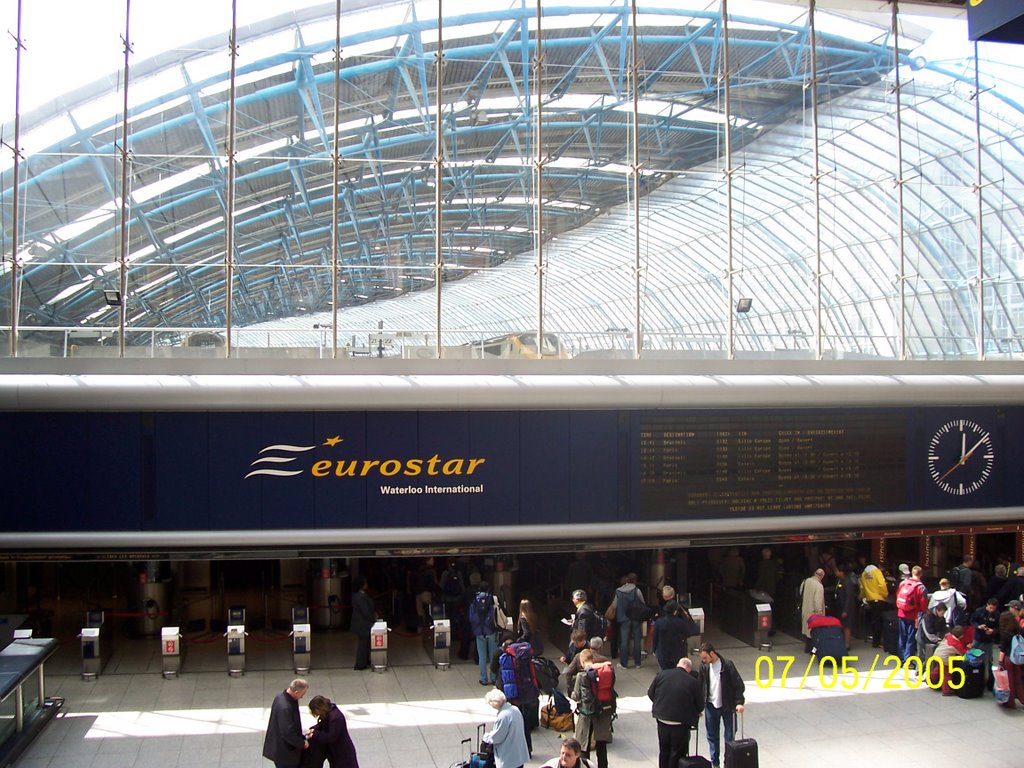
Eurostar


Eurostar is a train service that connects London (Waterloo station) with Paris (Gare du Nord), Lille and Brussels (Gare du Midi). Trains cross the English Channel via the Channel Tunnel, or "Chunnel". The French and Belgian sections of the route use the same high-speed rail lines as the TGV and Thalys, and in England a new line is being built to the same standard. This is a two-phase project known as the Channel Tunnel Rail Link project (CTRL).

The first revenue-earning Eurostar trains ran in November 1994. Eurostar has established a dominant share of the market on the routes it serves — 68% for London-Paris and 63% for London-Brussels, as of November 2004. The company points out that these passenger figures represent a saving of 393,000 carbon dioxide-producing short-haul flights.

The journey time from London to Paris is currently 2 hours 35 minutes; London to Brussels is 2 hours 20 minutes. These times will be cut by 20 minutes in 2007 when the construction of the second phase of CTRL is completed, bringing the British portion of the route up to the same standards as the French and Belgian sections. Completion of the CTRL will also allow a significant increase in the number of Eurostar trains serving London. After phase two is completed, up to eight trains per hour in each direction will be able to travel from London to the continent, as timetabling will be unaffected by peak hour restrictions at London Waterloo and conflicts between Waterloo and Fawkham Junction.

Some Eurostar services stop en route at Ashford International and at Calais-Fréthun and Lille in northern France in addition to the three destination cities. Eurostar also run services to Disneyland Paris, to Avignon in summer, and - in the skiing season - to Bourg-Saint-Maurice, Aime-la-Plagne and Moutiers in the French Alps.

From 2007 all Eurostar trains will be routed through the CTRL to a new London terminus at St Pancras. The company had intended to retain some services to the existing Waterloo terminal, but this was ruled out on cost grounds. Some trains will additionally serve new stations at Ebbsfleet near Dartford in northwest Kent (Ebbsfleet International station) and Stratford International station in east London (near Stratford station, or Stratford Regional station as it will be called when Stratford International station is opened)
Eurotunnel, the company that built and runs the Channel Tunnel, is a completely separate entity from Eurostar.

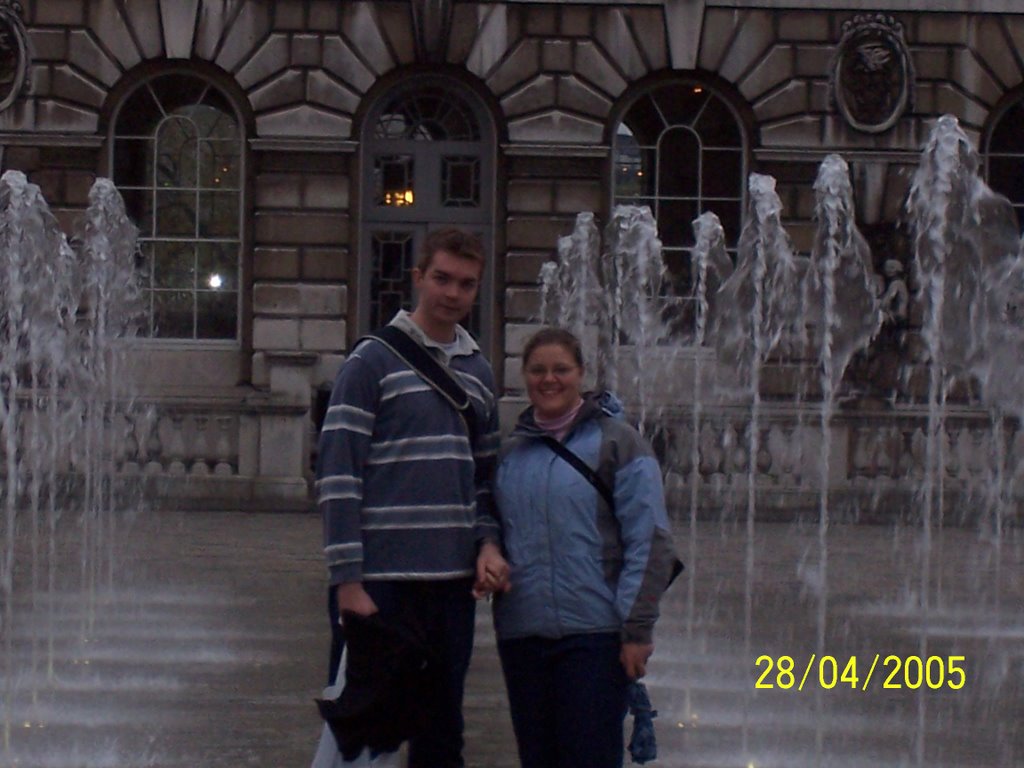
Somerset House


Somerset House is a large building situated on the south side of The Strand in central London, overlooking the River Thames, just east of Waterloo Bridge. The central block of the Neoclassical building, the outstanding project of the architect Sir William Chambers, dates from 1776–1796. It was extended by classical Victorian wings to north and south. A building of the same name was first built on the site more than two centuries earlier.

Somerset House takes its name from the London home of Edward Seymour, Duke of Somerset, who commissioned a riverside mansion on the site in 1547, one of a row of noblemen's houses with fronts along the Strand. The building was constructed from stone removed from some of the chantries and cloisters at St. Paul's Cathedral which were demolished at the behest of Somerset and other leading Protestant nobles as part of the ongoing Dissolution of the Monasteries.
When Somerset fell from grace in 1551 (being executed for treason the following year), the building passed to the Crown and was used by Princess Elizabeth for some years before she was crowned Queen Elizabeth I in 1558.

During the reign of King James I, the building became the London residence of his wife Anne of Denmark and was renamed "Denmark House". She commissioned a number of expensive additions and improvements, some to designs by Inigo Jones. This expansion of the building continued during Charles I's reign, including the then highly controversial addition by his wife, Henrietta Maria, of a Roman Catholic chapel (also designed by Jones – who was later to die at Somerset House, in 1652).

After the English Civil War and the Restoration, Somerset House once again became a royal residence, and was refurbished by Sir Christopher Wren in 1685. During the 18th century, however, the building ceased its royal associations. Though the view from its terraced riverfront garden, open to the public, was painted twice on his London visit by Canaletto (looking upriver and down), it was used for storage, as a residence for visiting overseas dignatories and as a barracks for troops. Suffering from neglect, demolition began in 1775.

As well as the Royal Academy, Somerset House was fitted out to house the Royal Society and the Society of Antiquaries. These, and the Geological Society, moved to Burlington House in Piccadilly in the early 19th century.

In the late 20th century the building was reinvigorated as a centre for the visual arts. The first institution to move in was the Courtauld Institute of Art, including the Courtauld Gallery, which has an important collection of old master and impressionist paintings. In the late 1990s the main courtyard ceased to be a civil service carpark, and the main terrace overlooking the Thames was refurbished and opened to the public, these alterations being overseen by the leading conservation architects Donald Insall & Associates.

A visitor centre featuring audiovisual displays on the history of the building; the gilded Lord Mayor of London's state barge; and a shop and cafe were opened in the wing overlooking the river. The Gilbert Collection of decorative arts, and the Hermitage Rooms, which stage exhibitions of items loaned from the Hermitage Museum in St Petersburg, moved into the same area. The Eastern wing is largely occupied by King's College London.

In the winter the central courtyard is home to an open air ice rink. At other times an array of fountains dispay vertical jets of water rising to random heights.

Somerset House was also the main location for the BBC's New Year Live television show, presented by Natasha Kaplinsky, which celebrated the arrival of the year 2006.

Friday, June 16, 2006

Camden Town

Camden Town

Camden Town is a place in the London Borough of Camden. It is an inner-city district located 2.3 miles (3.7 km) north north-west of Charing Cross, famous for its crowded market and as a centre for alternative lifestyles. The area is popular with students, including those from overseas. The area has a reputation for readily available drugs.

Attractions
The Regent's Canal runs through the north end of Camden Town and is a popular walk in summer. Close by is Regent's Park with the London Zoo sited in the north side. The Roundhouse is a music venue located in a converted railway roundhouse, which is currently (May 2003) being refurbished. It was originally an engine shed for the London and Birmingham Railway. Apart from the eponymous market, there is a selection of shops, bars and cafes, which are more mainstream on the High St. south of the tube station. The area has several language schools, such as Camden College of English, located at the Chalk Farm side of the market.

Camden market

Camden is well-known for Camden Market which is made up of Buck Street Market, Stables Market, Inverness Street Market, Camden Canal Market, and Camden Lock Market, and an indoor market located in the Electric Ballroom. The markets are a major tourist attraction, particularly busy at weekends, selling variety of fashion, lifestyle and bizarre goods; they (and the surrounding shops) are popular with young people, in particular those searching for "alternative" clothing. Stables Market also has growing antique and furniture trade.
Due to the high popularity of the Camden Market with visitors and tourists, some more mainstream businesses such as a Virgin Megastore and a Holiday Inn have moved into the area in recent years, diluting the "alternative" character that made the market popular. Food outlets in particular have thrived, and represent an extensive range of world cuisine.

Transport

Because of the popularity of the market it is necessary to close Camden Town tube station to outbound passengers on Sunday afternoon. To resolve the inadequacy of the station, London Underground sought to replace it with a much larger one. The proposal involved the compulsory purchase of the whole block on which the station is situated and would have required demolition of the Electric Ballroom and the reallocation of Buck Street Market. Larger shop units, office space and some flats were proposed for the new building. The radical changes gathered significant opposition from people who felt they would damage the character of the area, and they were rejected in 2004. Transport for London still wishes to enhance the station, but it is unclear when they will announce a new proposal or what it will involve.

In music

There is a song by Morrissey from his recent album You Are the Quarry called "Come Back To Camden", which was written about Camden Town; Camden Town, from Uffington Horse's debut album Enchantment, is also about the area. Camden Town is also mentioned in the Pulp song "Sorted for E's and Wizz".

In Film...

The cult film Withnail and I starts and ends in Camden Town, and features Regent's Park as well.

What a girl wants

Thursday, June 15, 2006

Sleutel-seremonie

Pieter en Anca het my pa na die sleutel-seremonie toe geneem! Dis baie spesiaal, want mens het 'n uitnodiging nodig!

Hier is meer info....

Probably the best known such ceremony is the one that takes place every night at the Tower of London, and has done so in some form or another since the 14th century. Just before 10pm, the Chief Warder, dressed in Tudor period uniform, meets the Escort of the Key, made up of men of the guard detachment. Together, they secure the main gates of the Tower.

Upon their return to the Bloody Tower archway, the party is halted by the sentry and challenged to identify themselves:

Sentry: Who comes there?

Chief Warder: The keys.

S: Whose keys?

CW: Queen Elizabeth's keys. (identifying the keys as being those of the British monarch as of 2006)

S: Pass Queen Elizabeth's Keys. All's well.

Following this, the party makes its way into the fortress, where the guard presents arms, and the Chief Warder raises his hat, proclaiming:

CW: God preserve Queen Elizabeth.

S: Amen!

He then takes the keys in for safekeeping, while the Last Post is sounded.

As with many events of ceremony in the United Kingdom, it takes some significant outside influence to interrupt the Ceremony of the Keys. The one time when the ceremony was interrupted was during the Second World War, when there was an air raid on London, and a number of incendiary bombs fell on the old victorian guardroom just as the Chief Yeoman Warder and the escort were coming through the Bloody Tower archway. The shock and the noise of the bombs falling, blew over the escort and the Chief Yeoman Warder but they stood up, dusted themselves down, and carried on. The Tower holds a letter from the Officer of the Guard apologising to King George VI that the ceremony was late and a reply from the King which says that the Officer is not to be punished as it was due to enemy action that the Ceremony of The
Keys was late.

The Ceremony of The Keys was also delayed in 2003 by a young officer of the Grenadier Guards serving on a gap year commission who fell asleep at his post whilst acting as Escort of the Key.

Die Beefeaters


The Yeomen Warders of Her Majesty's Royal Palace and Fortress the Tower of London, popularly known as the Beefeaters, are ceremonial guardians of the Tower of London. In principle they are responsible for looking after any prisoners at the Tower and safeguarding the British crown jewels, but in practice they act as tour guides and are a tourist attraction in their own right.

There are 36 Yeomen Warders. All warders are retired from the British armed forces and must have at least 22 years of service with good conduct, at the rank of, or equivalent to, Sergeant Major or above.

The Yeomen Warders are often incorrectly referred to as Yeomen of the Guard, which is actually a distinct corps of Royal Bodyguards. W. S. Gilbert shared this confusion by naming his operetta The Yeomen of the Guard when it appears to be about Yeomen Warders.

The Yeomen Warders normally wear an 'undress' uniform of dark blue with red trimmings. When the sovereign visits the tower, or the warders are on duty at a state occasion, they wear red and gold uniforms very similar to those of the Yeoman of the Guard.

The origin of the term 'Beefeater' is unclear. It may originate from the fact that early Warders were paid in beef, amongst other things. Count Cosimo, grand duke of Tuscany, visited the Tower in 1669 and commented on this "A very large ration of beef is given to them daily at court...that they might be called Beef-eaters" and earlier references can also be found. Other suggestions include that it was either a corruption of a French term buffetier, an archaic term for the guard of the king's food; or a derogatory term used when they were relatively well-fed at the side of many ordinary people who lived near them in London.

The warders themselves often comment that the "real beefeaters" at the Tower of London are the ravens, which receive a daily ration of beef. There has been an aerie of ravens kept at the Tower since before the time of Henry VIII, their purpose being to pluck the eyes from the heads of executed criminals after they are hung on display.

The term "beefeater" is also used to refer to the traditional headgear of the Yeoman Warders.
Beefeater gin is a brand of gin produced in the U.K. and depicting a Yeoman Warder on its label.

Tuesday, June 13, 2006

Wimbledon Stadion


Pieter en Anca bly naby aan Wimbledon stadion. Daar is 'n tennis museum waar hulle selfs ons Bakers Tennis Beskuitjies het!

The Championships, Wimbledon

The Championships, Wimbledon, commonly referred to as simply "Wimbledon", is the oldest and most prestigious event in the sport of tennis. Held every June or July, the tournament is the third Grand Slam event played each year, preceded by the Australian Open and the French Open, and followed by the U.S. Open. The tournament (which is the only one of the Grand Slam events played on grass courts) lasts for a fortnight, subject to extensions for rain. Separate tournaments are simultaneously held for Gentlemen's Singles, Ladies' Singles, Gentlemen's Doubles, Ladies' Doubles and Mixed Doubles. Youth tournaments — Boys' Singles, Girls' Singles, Boys' Doubles and Girls' Doubles — are also held. Additionally, special invitational tournaments are held: the 35 and over Gentlemen's Doubles, 45 and over Gentlemen's Doubles, 35 and over Ladies' Doubles and wheelchair doubles.

History

The Championships were first played under the control of the All England Lawn Tennis and Croquet Club in 1877 at a ground near Worple Road, Wimbledon; the only event held was Gentlemen's Singles. In 1884, the All England Club added Ladies' Singles and Gentlemen's Doubles. Ladies' Doubles and Mixed Doubles were added in 1913. The Championships moved to their present location, at a ground near Church Road, in 1922. As with the other three Grand Slam events, Wimbledon was contested by top-ranked amateur players until the advent of the open era in tennis in 1968. Britons are very proud of the tournament but it is a source of national anguish and humour — no British man has won the singles event at Wimbledon since Fred Perry in 1936, and no British woman since Virginia Wade in 1977.

Events

There are five main events held at Wimbledon: Gentlemen's Singles, Ladies' Singles, Gentlemen's Doubles, Ladies' Doubles, and Mixed Doubles. In addition, four events are held for juniors: Boys' Singles, Girls' Singles, Boys' Doubles, and Girls' Doubles. (The Mixed Doubles event is not held at the junior level.) Finally, four invitational events are held: the 35 and over Gentlemen's Invitation Doubles, the 45 and over Gentlemen's Invitation Doubles, the 35 and over Ladies' Invitation Doubles, and the Wheelchair Gentlemen's Invitation Doubles.
Matches in the Gentlemen's Singles and Gentlemen's Doubles competitions are best-of-five sets; matches in all other events are best-of-three sets. Most events are single-elimination tournaments; in other words, a player who loses a single match is immediately eliminated from the tournament. However, the 35 and over Gentlemen's Invitation Doubles and the 35 and over Ladies' Invitation Doubles are both round-robin tournaments.
Each year, the tournament begins six weeks before the first Monday in August. It is held two weeks after the Queen's Club Championships, which is considered the major warm-up for Wimbledon for male players. Another important warm-up tournament for the men is the Gerry Weber Open, which is held in Halle, Germany at about the same time as the Queen's Club Championships. Wimbledon usually lasts for two weeks; the main events span both weeks, but the junior and invitational events are for the most part held during the second week. Traditionally, there is no play on the "Middle Sunday," which is considered a rest day. However, rain has forced play on the Middle Sunday thrice in Championships history: in 1991, 1997, and 2004. On each of these occasions, Wimbledon has staged a "People's Sunday", with unreserved seating and readily available, inexpensive tickets.


Players and seeding


A total of 128 players feature in each singles event, 64 pairs in each single-sex doubles event, and 48 pairs in Mixed Doubles. Players and doubles pairs are admitted to the main events on the basis of their international rankings. The Committee of Management and the Referee evaluate all applications for entry, and determine which players may be admitted to the tournament directly. The committee may admit a player without a high enough ranking as a "wild card." Usually, wild cards are players who have performed well during previous tournaments, or would stimulate public interest in Wimbledon by participating. The only wild card to win the Gentlemen's Singles Championship was Goran Ivanisevic (2001); no wild card has ever won the Ladies' Singles Title. Players and pairs who neither have high enough rankings nor receive wild cards may participate in a qualifying tournament held one week before Wimbledon at the Bank of England Sports Ground in Roehampton.

The singles qualifying competitions are three-round events; the same-sex doubles competitions last for only one round. There is no qualifying tournament for Mixed Doubles. No qualifier has won either the Gentlemen's Singles or the Ladies' Singles tournaments; in 1977, John McEnroe went farther than any other qualifier in history by reaching the semifinals.


Players are admitted to the junior tournaments upon the recommendations of their national tennis associations, and, in the case of the singles events, on the basis of a qualifying competition. The Committee of Management determines which players may enter the four invitational events.


The Committee seeds the top players and pairs (thirty-two players in each main singles events, and sixteen pairs in each main doubles event) on the basis of their rankings. The defending champion is normally, but not always, seeded first. A majority of the entrants are unseeded.

Only two unseeded players have ever won the Gentlemen's Singles Championship: Boris Becker in 1985 and Goran Ivanisevic in 2001. No unseeded player has captured the Ladies' Singles title; the lowest seeded female champion was Venus Williams, who won in 2005 as the fourteenth seed. Unseeded pairs have won the doubles titles on numerous occasions; the 2005 Gentlemen's Doubles champions were not only unseeded, but also (for the first time ever) qualifiers.


Grounds

The order of play for all courts is displayed on boards around the groundsThe nineteen courts used for Wimbledon are all composed purely of rye grass. The speed and the low bounce of grass courts favours serve and volley players. Serve and volleyers such as Rod Laver, John McEnroe, Boris Becker, Stefan Edberg, and Pete Sampras have all won the Championships. However, baseliners such as Björn Borg have also performed very well, as have all-court players like Roger Federer. Among women, the serve and volley strategy is less common; one of the few female serve and volleyers, Martina Navrátilová, won Wimbledon on a record nine occasions.


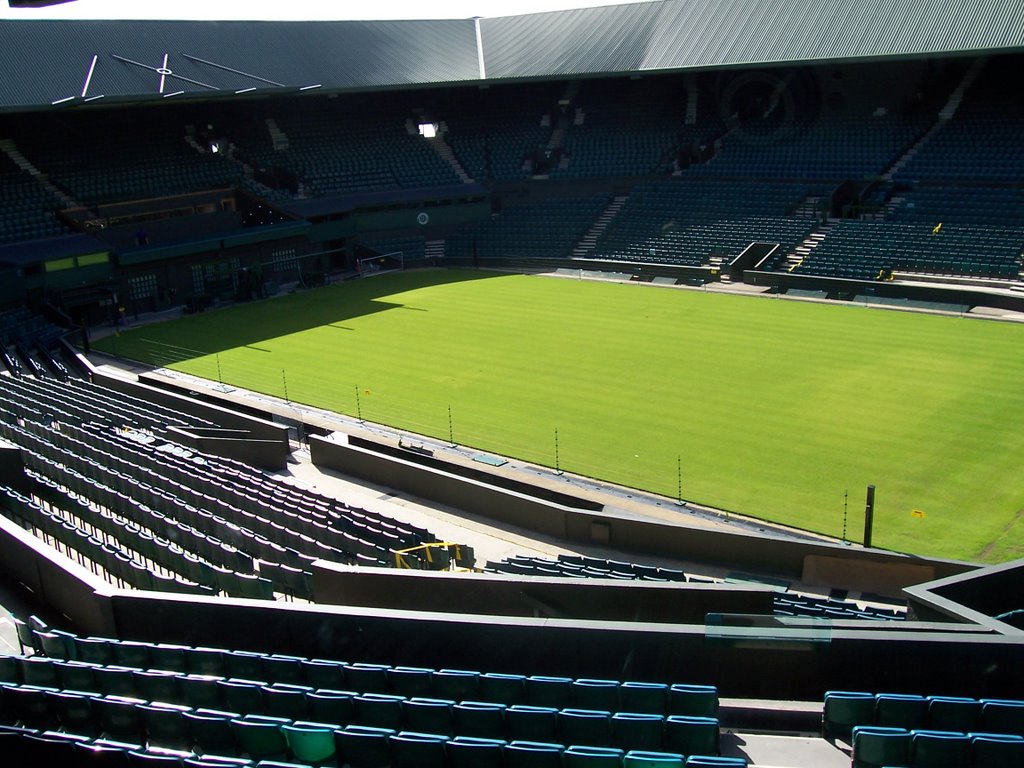
The main show courts, Centre Court and No. 1 Court, are used only for two weeks a year, during the Championships. The remaining seventeen courts, however, are regularly used for other events hosted by the All England Lawn Tennis and Croquet Club. Wimbledon is the only Grand Slam event played on grass courts. At one time, all of the other Grand Slam events were played on grass. The French Open abandoned grass for its current red clay in 1928, while the U.S. and Australian Opens stayed with grass decades longer. The U.S. Open abandoned grass for a synthetic clay surface in 1975, and changed again to a hard surface with its 1978 move to its current venue. The Australian Open abandoned grass for a different type of hard surface in 1988.


The main court, Centre Court, was opened in 1922 when the All England Lawn Tennis and Croquet Club moved from Worple Road to Church Road. Due to possibility of rain during Wimbledon, a retractable roof is planned for the court; it is expected to be completed in 2009. The court has a capacity of almost 14,000; at its south end is the Royal Box, from which members of the Royal Family and other dignitaries watch matches. Centre Court usually hosts the finals and semifinals of the main events, as well as many matches in the earlier rounds involving top-seeded players.


The second most important court is No. 1 Court. The court was constructed in 1997 to replace the old No. 1 Court, which was adjacent to Centre Court, but was demolished because its capacity for spectators was too low. The original No. 1 Court was said to have a unique, more intimate atmosphere, and was a favourite of many players. The new No. 1 Court has a capacity of approximately 11,000. The third-largest court, No. 2 Court, has been dubbed the "Graveyard of Champions" due to its reputation as the court on which many seeded players have been eliminated during the early rounds. Famous players who have lost on the Graveyard during early round play include John McEnroe, Pete Sampras, and Serena Williams. The court has a capacity of about 3,000.


At the northern end of the grounds is a giant television screen on which important matches are broadcast. Fans watch from an area of grass officially known as Aorangi Park, but more commonly called Henman Hill. The "hill" takes its name from local favourite Tim Henman, whom many fans hope will become the first British man to win the tournament since Fred Perry did so in 1936. Due to Tim Henman's early exit and British newcomer Andy Murray's relative success in the 2005 Championship, the hill may be renamed as Murray Mound, Mount Murray, or Murray Field (after the Scottish rugby stadium).


Traditions

Dark green and purple are the traditional Wimbledon colours. Green apparel is worn by the chair umpire, linesmen, ball boys, and ball girls. The All England Club requires players to wear "predominantly white" clothing during matches. No other Grand Slam tournament has such a strict dress code for players. During matches, female players are always referred to with the title "Miss" or "Mrs". (Formerly, married female players were referred to by their husband's names: for example, Chris Evert-Lloyd appeared on scoreboards as "Mrs. J. M. Lloyd" during her marriage to John M. Lloyd. However, this custom has been abandoned.) On the other hand, the title "Mr" is never used for male players.Previously, players bowed or curtsied to members of the Royal Family seated in the Royal Box upon entering or leaving Centre Court. In 2003, however, the President of the All England Club, HRH The Duke of Kent, decided to discontinue the tradition. Now, players are required to bow or curtsy only if the Queen or the Prince of Wales is present.For the spectators, strawberries and cream is the traditional snack at Wimbledon. Approximately 28,000 kilograms of strawberries and 7,000 litres of cream are sold each year during the Championships.Since 1992 Radio Wimbledon has broadcast commentary, speech and music from 7am to 10pm daily throughout the championship. It can be heard within a four-mile radius on 87.7 FM and also online.

Trophies and prize money

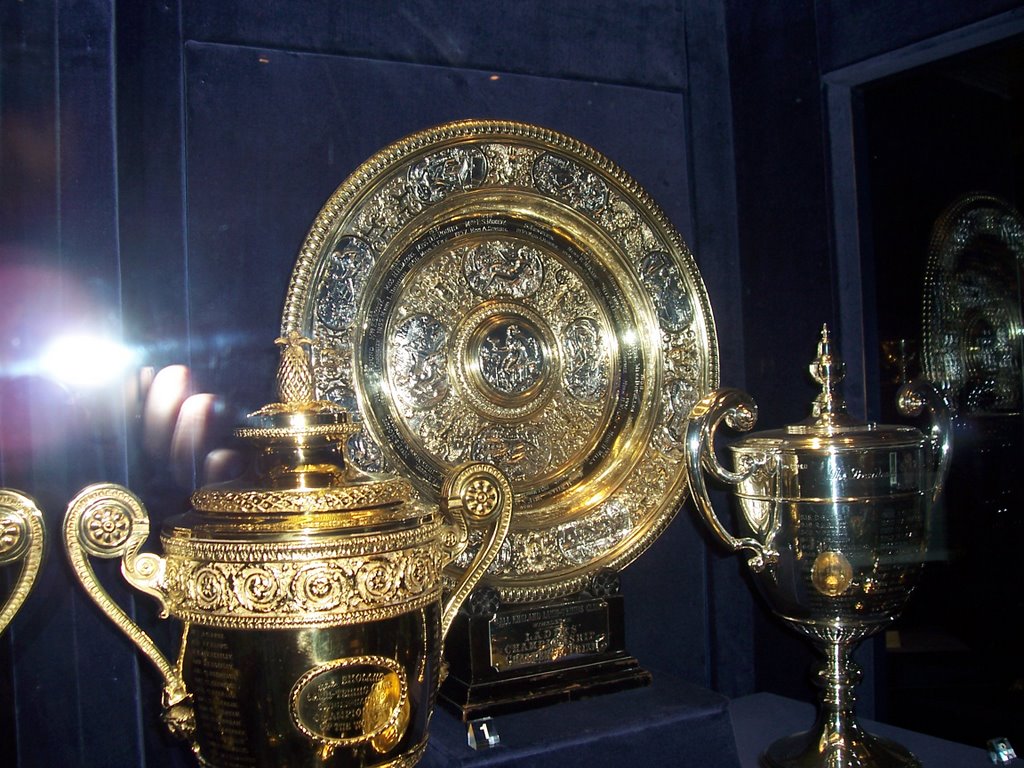
The Gentlemen's Singles champion receives a silver gilt cup 18.5 inches (about 47 cm) in height and 7.5 inches (about 19 cm) in diameter. The trophy has been awarded since 1887. It bears the inscription "The All England Lawn Tennis Club Single Handed Champion of the World." The Ladies' Singles champion receives a sterling silver salver commonly known as the "Venus Rosewater Dish," or simply the "Rosewater Dish."

The salver, which is 18.75 inches (about 48 cm) in diameter, is decorated with figures from mythology. The winners of the Gentlemen's Doubles, Ladies' Doubles, and Mixed Doubles events receive silver cups. The runner-up in each event receives an inscribed silver plate. The trophies are usually presented by the President of the All England Club, HRH The Duke of Kent, and by his wife, HRH The Duchess of Kent. At Wimbledon, more prize money is awarded in the Gentlemen's events than in the Ladies' events. This is justified by the rules that men must win 3 out of 5 sets to win a match, where as women only need to win 2 out of 3. The French Open also offers higher prize money for men, but the Australian Open and the U.S. Open provide parity.

The sums awarded to the winners of each of the main events in 2005 are as follows (the amounts shown for the doubles events are per pair):

Gentlemen's Singles: £630,000

Ladies' Singles: £600,000

Gentlemen's Doubles: £218,500

Ladies' Doubles: £203,250

Thursday, June 08, 2006

Terwyl dit by ons koud is...


Ice Skating - Medieval Style!

The capital's ice rinks are nothing new - Londoners have been skating since the 12th Century on rather unusual skates...

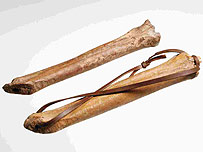
Somerset House is just one of many amazing ice rinks to be found in London this year but ice skating in the capital is nothing new. A new exhibition, Medieval London, includes a pair of ice skates dating back to the Medieval times.

The skates, made from cattle bones, have been found around the Moorfields area of the city. They would have been strapped to the feet as Londoners took to the frozen marshes using a special stick to glide across the ice.

Skaters either lost their skates or threw them away at the end of the season where they have since been discovered. The marshy earth helps to preserve the bone for so long .
William FitzStephen, one of Thomas Becket's clerks, described in the 1170s how Londoners would go out to the frozen marshes of Moorfields in the winter. They 'fit to their feet the shinbones of cattle and push themselves across the ice using a stick with an iron spike on the end'

'When the great marsh that washes the Northern walls of the City is frozen, dense throngs of youths go forth to disport themselves upon the ice. Some gathering speed by a run, glide sidelong, with feet set well apart, over a vast space of ice. Others make themselves seats of ice like millstones and are dragged along by a number who run before them holding hands. Sometimes they slip owing to the greatness of their speed and fall, everyone of them, upon their faces'.

So how far back do teenage yobs and binge drinking go? What did Londoners feel about the worst epidemic the city has ever known? Where did London go for 200 years? And who bought all those hot sheep’s feet? The answers to these and other questions can be found in the Museum of London’s new Medieval London gallery opening on 25 November.The gallery tells the story of London from the end of Roman rule in AD410 to the accession of Elizabeth I in 1558, a period when London survived near extinction to become England’s capital and one of the most prosperous cities in Europe.

Wednesday, June 07, 2006

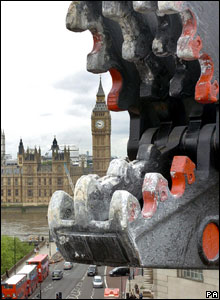
Demolition work begins on eyesore


Six-year-old Harrison Richards launched the demolition workOne of London's most hated eyesores is being razed to the ground to make way for a £300m luxury hotel.

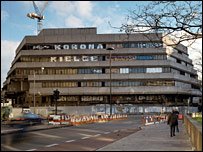
The vast concrete County Hall Island Block apartments on the South Bank next to Waterloo station belonged to the now-defunct Greater London Council.

Having stood empty for 20 years, the block, built in 1970, is to be demolished over the next four months.

By 2010, Westminster Bridge Park Plaza will rise 14 storeys high to overlook Big Ben and the Houses of Parliament.

I am absolutely devastated - I consider that it was a distinguished building
John Bancroft, architect

The job of setting the bulldozers in motion fell to six-year-old Harrison Richards, from Oakley Green in Berkshire.

He lives with Wilms Tumour, a cancer of the kidney, and was granted his wish by the charity, Make-a-Wish Foundation UK.

Last year, the six-floor block was named as the 11th ugliest building in Britain by a poll for Channel 4 programme Demolition, coming two places behind London's highest entry, the Tower in Colliers Wood in south-west London.

But despite its lack of popularity, it seems not everyone will be happy to see No 1 Westminster Bridge Road go.

Architect John Bancroft, who formerly worked for the Greater London Council, said the block should have been listed. "I am absolutely devastated," he said. "I consider that it was a distinguished building and it was an early open plan office building, when open plan was not all that common.

"I always thought it should have received a listing in with County Hall."

Storie en foto's van BBC

Monday, June 05, 2006

Welkom terug, Pieter & Anca!

Nog is dit (Diana se) einde niet!


Di-ondersoek ’n slag vir Al-FayedJun 04 2006 09:33:12:240PM - (SA)

Mandy Rossouw

Londen. – Prinses Diana van Wallis was nóg swanger nóg verloof aan Dodi al-Fayed ten tyde van haar dood in Parys in 1997.

Lord John Stevens, die voormalige polisiehoof wat aangestel is om die besonderhede van Diana se dood in ’n motorongeluk in ’n Paryse tonnel te ondersoek, sê glo in sy verslag geen bewys bestaan dat die prinses swanger was nie.

Hy het bygevoeg die juwelier wat glo aan Dodi en Diana haar verloofring verkoop het, is weer ondervra en hy het erken die verloofring van £2 miljoen (sowat R25 miljoen teen die huidige wisselkoers) het nooit bestaan nie.

Stevens se verslag word eers later vanjaar bekend gestel, maar het aan die Mail on Sunday en News of the World uitgelek.

Die onthullings plaas mnr. Mohamed al-Fayed, eienaar van die luukse winkel Harrods en pa van Dodi, in ’n verleentheid nadat hy sedert die ongeluk volgehou het die voorval is die werk van sinistere magte.

Al-Fayed sr. meen die ongeluk is beplan deur Britse intelligensiemagte soos MI5 en MI6.
Hy sê Diana was swanger met Dodi se kind en die Britse koningsgesin wou nie ’n baba in hul midde hê wat “half-Moslem” is nie. Hy het prins Philip, koningin Elizabeth II se man, die skuld vir die ongeluk gegee en gesê die prins sou enigiets doen om te keer dat prins William ’n halfbroer het wat ’n Moslem is.

Volgens Al-Fayed is die ongeluk beplan en die paparazzi wat Diana en Dodi die aand van die ongeluk agtervolg het, was spioene.

Volgens Stevens se ondersoek dui niks op die betrokkenheid van MI5 en MI6 nie.

Dodi en Diana sou luidens sy verslag waarskynlik die ongeluk oorleef het indien hulle veiligheidsgordels gedra het.

Die ondersoek het bevestig dat mnr. Henri Paul, die bestuurder van die Mercedes-Benz waarin hulle gery het, dronk én te vinnig gery het en beheer oor die motor verloor het. Hy was nie, soos Al-Fayed beweer, ’n spioen wat met die intelligensiedienste saamgewerk het nie.

Wednesday, May 31, 2006

Philip, the Duke of Hazard

Philip, the Duke of Hazard 30/05/2006 09:19 - (SA)

David Stringer

London - Britain's Prince Philip had not caused offence when he claimed he intends to do "as little as possible" during the 2012 Olympic Games in London, event organisers said on Monday.
The comments came days before publication of a book, which catalogues the prince's history of making verbal gaffes.

The husband of Queen Elizabeth II, who turns 85 on June 10, said he finds Olympic opening and
closing ceremonies "absolute bloody nuisances," in comments attributed to him in an interview with Britain's Daily Telegraph newspaper.

Asked if he intended to perform duties during the 2012 Olympics, by which time he will be 91, the prince told the newspaper he hoped to do "as little as possible".

Ceremonies 'absolute bloody nuisances'

A spokesperson for the Queen's Buckingham Palace residence said the prince had granted the interview before his birthday and confirmed she had no reason to doubt the authenticity of the comments.

"I am truly fed up with the opening and closing ceremonies. They are a pain in the neck," Prince Philip told the newspaper, in an interview first published in Saturday editions.

"Opening and closing ceremonies ought to be banned. Absolute bloody nuisances. I have been to one that was absolutely, appallingly awful," he told the newspaper.

Jackie Rock-Doyle, London 2012 chief spokesperson, said the comments were a "good thing" and would only serve to raise public interest, according to a statement.

"The great thing about the Olympic and Paralympic Games is that pretty much everyone has a view - from the Royal Family down," she said.

Collection of gaffes

The prince's latest barb came before the publication on Wednesday of The Duke of Hazard: The
Wit and Wisdom of Prince Philip, a book that celebrates six decades of his blunt - and often politically incorrect -comments during engagements across the world.

The 100-page book includes details of an infamous gaffe in Beijing, China in 1986, when the prince told British students "if you stay here much longer you'll all be slitty-eyed".

It also recounts an occasion in Cardiff, Wales, when he addressed young members of the British Deaf Association who were standing close to a band playing steel drums. "Deaf? If you are near there, no wonder you are deaf," the prince told them.

In Hungary, the prince is said to have told a British man he must have only arrived recently as he hadn't "got a pot belly" and in Scotland, asked a driving instructor how he managed to "keep the natives off the booze long enough" to pass their driving test.

Authors Phil Dampier and Ashley Walton and the book's publisher Book Guild Limited were not immediately available for comment.

"We are aware of the book, but it is matter for the authors," said the Buckingham Palace spokesperson, speaking on customary condition of anonymity.

Tuesday, May 30, 2006

New York


Pieter verjaar vandag in New York. Anca het vir hulle 'n helikoptertrippie na (en om) Manhattan bespreek... lekker bederf ;-)

Geniet jou verjaarsdag, Boeta!

New York City

New York, the ‘city that never sleeps’, is one of the world’s great metropolises, offering visitors everything from the ethnic flavors of Chinatown and Little Italy, to the galleries of SoHo, the cafes of Greenwich Village, the glitz of the Theater District, the shopping on Fifth Avenue and the affluence of Park Lane and the Upper West Side.

New York City is made up of five boroughs and is laid out on a grid of avenues and streets. Most tourist sights are found on Manhattan Island, the city’s entertainment and business center. The remaining four boroughs are primarily residential – the Bronx to the north, Queens to the east, Brooklyn to the southeast and Staten Island to the southwest. Each has wealthy and salubrious districts alongside working-class neighborhoods – demonstrating New York’s varied social mix. The total area of all five boroughs is 780 sq km (301 sq miles).

New York’s location at the mouth of the Hudson River on the Atlantic Ocean is reflected in the city’s importance as a port, and as the point of disembarkation for millions of immigrants to the USA. Vibrating with the energy of over 7 million inhabitants, New York is a constantly evolving, growing and changing organism.

The sheer volume of things to do – theater, ballet, opera, museums – is astonishing. Many of the city’s 18,000-plus restaurants are reporting boom times, while several new hotels have emerged over the past few years. Renovations of historic theaters in the area – such as the Victory, the Lyric or the Academy/Apollo – have been followed by a flood of restaurateurs and prospective retail tenants signing up for space on or near Times Square.

The terrorist attacks on Manhattan’s famous Twin Towers on 11 September 2001 has had a detrimental effect on the city’s tourism. However, New York’s JFK airport still enjoys its status as the USA’s busiest airport for international arrivals, with over 15 million international tourists (many of them from the UK) using the airport in 2002. On the whole, however, numbers are down, with Newark International and La Guardia reporting a 4 per cent and 6 per cent decrease in international arrivals respectively. Crime, on the other hand, is plummeting, following the introduction of ‘zero tolerance’ policing; according to FBI crime statistics, the city is the safest large city in the USA.

The New York City Police Museum, at 100 Old Slip at South Street, shows just how this is done. Visitors with disabilities will now find wheelchair access to 99 per cent of New York City buses and 40 per cent of subway stations. Public telephones for the deaf are also widespread. Two brochures for disabled people are available from New York City Transit (see contact number above).

Manhattan

The Manhattan skyline is an instantly recognizable sight, immortalized in countless films and television programs. One of the best views of it can be obtained from the Staten Island Ferry (see below).

Following the terrorist attacks of 11 September 2001, the famous landmark of the World Trade Center with its twin towers was completely destroyed, forever altering both the skyline and the history of America. The decision has recently been made to build a memorial at the ‘Ground Zero’ site. The Lower Manhattan Development Corporation announced in January 2004 that Michael Arad and Peter Walker’s design for a grove of trees above two reflecting pools, named ‘Reflecting Absence’, would be chosen to immortalise that infamous event. The design was chosen over 5000 submitted ideas. Also in the planning is the ambitious Freedom Tower skyscraper, designed by David M Childs, which could have a unique turbine tower as a feature, creating one-fifth of the energy used by the building and doubling as somewhat unorthodox Buddhist prayer wheels.

The first European settlement on Manhattan was by the Dutch in the 1620s, who named the city New Amsterdam. In 1664, the British took over and renamed it New York, and settlement continued from south to north along the island. Skyscrapers, such as the art-deco Empire State Building, offer spectacular views of the city by day or night. Statue of Liberty and Ellis Island: New York’s most famous image is the 46.5m- (151ft-) high Statue of Liberty, located on Liberty Island, which may be reached by boat from Battery Park on Manhattan’s southern tip. A lift and staircase inside the Statue take visitors up to an observation platform.

The Liberty/Ellis Island Ferry departs from the historic Castle Clinton at Battery Park every 30 minutes and also stops at Ellis Island, the gateway for the massive numbers of immigrants arriving in New York between 1892 and 1954. On the island, the Wall of Honor, the world’s longest wall of names, commemorates over 600,000 immigrants, and the Ellis Island Immigration Museum offers an interesting insight into the lives of New York’s early immigrants.

In Battery Park City, the new Skyscraper Museum celebrates the architectural style so intrinsic to the city’s history and psyche. Lower Manhattan: The oldest part of the city is at the southern end of Manhattan. East of Battery Park is the Financial District, containing the famous Wall Street and the New York Stock Exchange, where visitors have access to a public gallery to catch a glimpse of the frenetic trading action. The historic South Street Seaport, located at the end of Wall Street, offers great views of New York Harbor. The seaport is a thriving waterfront community with a world-class maritime museum and more than 100 shops, cafés and restaurants.

To the northeast of the seaport is the famous Brooklyn Bridge, leading to Brooklyn. Chinatown, Manhattan’s most thriving ethnic neighborhood extends from Canal Street into Little Italy and east into the Lower East Side. This labyrinth of narrow streets, crammed with Chinese stores and restaurants, is home to over 100,000 residents.

While Chinatown has expanded in recent years, neighboring Little Italy has dwindled somewhat, and few of the original Italian immigrants remain, though Little Italy’s restaurants, delis and bakeries remain as tempting as ever.

East of Little Italy, the Lower East Side has traditionally been New York’s Jewish area, owing to a flow of Jewish immigrants to the area in the late 19th and early 20th centuries. The recently revamped Museum of Jewish Heritage is located here. In addition to its other two Manhattan venues, the Guggenheim Foundation is adding a new waterfront museum on the East River. The area is also known for its Orchard Street Market, an open-air bazaar, and its numerous delis.

To the northwest, Greenwich Village has been a melting pot for art, literature and music for decades, though its legendary bohemian feel has partly been replaced by upmarket beatnik chic. South of Greenwich Village is SoHo (South of Houston), which has become synonymous with art since the 1960s, and retains its arty, avant-garde character, with plenty of galleries, cafes, boutiques and loft spaces fronted by interesting cast-iron façades.

Still further south is TriBeCa (Triangle Below Canal Street), once a deserted warehouse district, and now a growing residential area. Midtown Manhattan: The heart of the city is located between 34th Street south and 59th Street north and contains several of New York’s landmark buildings, including the 102-story Empire State Building (completed in 1931).

Worth visiting here are Bryant Park and the beautiful New York Public Library nearby; the 1930s art-deco Chrysler Building (New York’s first skyscraper); the United Nations Building (the organization’s world headquarters); Grand Central Station, which has been completely restored, with special attention paid to its magnificent constellation ceiling; Fifth Avenue, the city’s most glamorous thoroughfare, filled with luxury shops and department stores; the Chelsea neighborhood, home of the landmark Chelsea Hotel and also center for New York’s gay community as well as a new magnet for art galleries and commercial developers; the Rockefeller Center, famous for its (winter-only) ice skating rink and also the home of NBC Studios, which can be visited (the Center reopened its observation deck in 2005, website: http://www.www.rockefellercenter.com/) and the new American Folk Art Museum.

A few blocks away, the highly celebrated Museum of Modern Art underwent a massive US$650 million expansion, which was completed in spring 2004. The Carnegie Hall now also includes the Judy and Arthur Zankel Hall. At the heart of Midtown is the Broadway theater district near the recently revamped, once seedy but now ‘family-friendly’ Times Square, with its recently reopened Biltmore Theater, and the world’s largest toy store, home to a 60ft Ferris wheel and life-size Barbie house. Uptown Manhattan: Uptown Manhattan covers the area north of 59th Street and is split roughly in the middle by Central Park (see below).

To the northwest of the park is Columbia University and the Cathedral of St John the Divine, the world’s largest Gothic cathedral, which is still under construction (begun in 1812); the cathedral was recently designated a landmark by the New York City Landmark Preservation Commission. The new US$115 million Jazz at Lincoln Center opened in autumn 2004; the venue is part of the new AOL Time Warner Center, which contains luxury retail outlets, restaurants, office space, condominiums and a 249-room hotel. The Alvin Ailey American Dance Theater also opened its new facility in autumn 2004. The Joan Weill Center for Dance will be the largest facility dedicated exclusively to dance in the USA. Further north, Harlem is noted for its rich African-American community. Good examples of classic New York brownstones can be seen in Harlem’s Sugar Hill. Several decayed and crime-ridden areas in Harlem are now being redeveloped.

Brooklyn

Brooklyn is best reached via Brooklyn Bridge, which is particularly striking at night, and usually bustling with people during the day. Having crossed the bridge, visitors arrive in Brooklyn Heights, a good area to walk around.

The Jewish Children’s Museum is a new attraction to the area. Further southeast lie Prospect Park and the adjacent Brooklyn Botanic Gardens; the Brooklyn Academy of Music, home to the interesting Next Wave Festival; and the historic Park Slope district, notable for its old brownstones. Downtown Brooklyn is home to the recently renovated New York Transit Museum, located in a decommissioned subway station, with over 200 trolleys on display.

Coney Island and Brighton Beach, the latter full of Russian shops and restaurants, are at the south/southeastern end of the borough.

The Bronx

Major attractions include the world-famous Bronx Zoo and New York Botanical Garden; Yankee Stadium, home to the Yankees baseball team; Poe Cottage, former home of the writer Edgar Allan Poe; and Woodlawn Cemetery, where several famous musicians, including Miles Davis, are buried. This area of New York is currently good at breaking records.

The 19,200-seat Randall’s Island Pavilion opened in May 2003 and was the first major new live stage venue to be built in the city in 30 years, while the Ferry Point Park Golf Course, designed by Jack Nicklaus, will open later this year as the first golf course to be built in the city for 35 years.

Queens

Major attractions in the borough include the Astoria Movie Studios with the (attached) American Museum of the Moving Image, close to La Guardia airport; and Shea Stadium (home to the New York Mets Major League Baseball team), with the nearby Flushing Meadows-Corona Park.

The southern half of Queens includes a portion of the Gateway National Recreation Area which, despite its location next to JFK International Airport, provides a refuge to hundreds of bird species.Staten IslandVisitors to the island often do so mainly to enjoy the view of the classic New York skyline from the Staten Island Ferry, which operates from Battery Park (downtown) past the Statue of Liberty and Ellis Island to Staten Island.

The Verrazano-Narrows Bridge connects Staten Island with Brooklyn.Parks & BeachesNew York’s most famous park, Central Park, was created in 1856, when officials set aside 341 hectares (843 acres) of land between Fifth and Eighth Avenues and 59th and 110th Streets. John Lennon fans may pay their respects at Strawberry Fields, the area of the park dedicated to his memory. Also within the park is the Central Park Wildlife Center, a small but interesting zoo.

During summer, the park hosts afternoon and evening concerts. Additions to the park include the Dana Discovery Center and fishing pond (with free poles and bait). Visitors should note that it is not advisable to visit Central Park after dark. The recently restored Bryant Park, behind the New York Public Library, has been a great success with businesspeople and visitors on lunch, especially as it offers free outdoor concerts and comedy shows.

Reminiscent of Paris, with gravel pathways, green folding chairs and a manicured lawn, it’s a great place for sunbathing, reading or enjoying a sandwich or salad bought from kiosks in the park. The fountain at the western end is a good place for a romantic rendez-vous.

Other parks include the world-famous New York Botanical Garden in the Bronx, which has 100 hectares (250 acres) of woods, waterways and gardens and whose centerpiece is the newly restored Enid A Haupt Conservatory. Riverside Park, running alongside the Hudson River; Battery and Washington Square parks in Lower Manhattan; the Brooklyn Botanical Gardens, Marine Park and Prospect Park in Brooklyn; and Cunningham, Flushing Meadows/Corona, Jacob Riis and Kissina parks in Queens. Clove Lake Park and Fort Wadsworth on Staten Island boast impressive views of New York harbor.

There are several fine beaches to the east of New York City. Nearest to Manhattan are Brighton Beach, Coney Island and Manhattan Beach. Other beaches include Orchard Beach in Pelham Bay Park, South Beach and Wolfe’s Pond Park on Staten Island.

Special Events

The following is a selection of special events occurring in New York City in 2005; for further events, contact NYC & Company CVB (see General Info section): Mar 17 St Patrick’s Day Parade, Manhattan. Jun-Aug Celebrate Brooklyn Performing Arts Festival, Brooklyn. Jul 4 Macy’s 4th of July Fireworks, near East River. Aug Harlem Week, citywide. Aug 29-Sep 11 US Open Tennis Tournament, Flushing. Nov 6 New York City Marathon. Nov 24 Macy’s Thanksgiving Day Parade, Manhattan. Dec 31 New Year’s Eve at Times Square.